US widens Iran blockade to ships that take Iranian oil in transfers at sea
A US military advisory says vessels receiving Iranian-loaded cargo from another ship may be stopped, boarded or seized, even if they never enter Iranian waters. Tracking firms say a tanker may be testing the blockade.
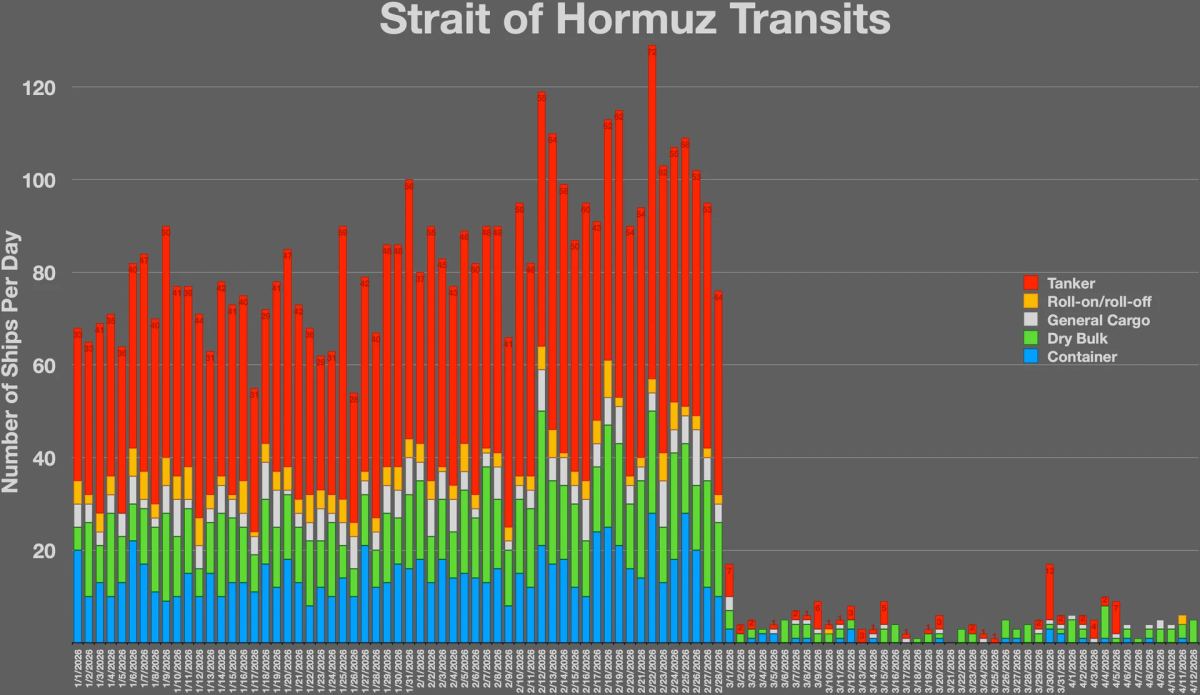
The United States has widened its naval blockade of Iran to cover ships that take on Iranian cargo through ship-to-ship transfers at sea, closing what analysts describe as a loophole that let some Iranian oil reach world markets, Al Jazeera and Marine Insight reported on Friday 20 November.
The change was set out in an advisory from US Central Command (CENTCOM) on Wednesday 18 November, according to Al Jazeera. Marine Insight attributed the notice to the US military.
What the new rule says
Under the advisory, any vessel that receives cargo from a ship covered by the blockade, where the cargo was loaded at an Iranian port or coastline, may be treated as evading the blockade, even if it has never entered Iranian waters, Al Jazeera reported.

Such vessels may be stopped, boarded, diverted or captured, or ordered to the Iranian port the cargo came from. Ships that refuse could face enforcement action, including the use of force, the advisory said.
A tanker testing the blockade
Citing Reuters and the tracking group TankerTrackers.com, Al Jazeera said a vessel was seen on Thursday 19 November loading Iranian crude through a ship-to-ship transfer in the Gulf. The tanker was not named.
Marine Insight said that if the tanker leaves the blockade area, it would be the first seaborne Iranian crude export since mid-July. It said no new Iranian crude cargo has crossed the blockade line towards China since 14 July, and that Iran loaded no crude or condensate at all in September.
Earlier in the week, the US-sanctioned tanker Olym transferred oil to a smaller tanker, Hao Fan, near Kharg Island with both ships’ transponders switched off, Marine Insight reported. A US-based monitoring group said the roughly 200,000 barrels involved were too few to make an export voyage worthwhile.
What Iran has said
Iranian authorities had not formally responded to the CENTCOM advisory when Al Jazeera published. The semi-official Fars news agency ran a commentary proposing that a convoy of tankers be sent through the blockade, and warning of strikes on regional energy sites, especially in the UAE, if US forces intervened.
An outlet linked to the Revolutionary Guards claimed in an unofficial post that dozens of Iranian tankers were preparing to sail for China, Marine Insight reported. Neither claim came from a named official.
Andreas Krieg, an analyst at King’s College London, told Al Jazeera that a confrontation over tankers could be one of the most dangerous escalation scenarios in recent weeks. He said Iran cannot break the blockade by force but could make it costly to enforce.
Background
According to Al Jazeera, the US first imposed the blockade of Iranian ports on 13 April, lifted it in June after an understanding with Tehran, and reinstated it on 14 July when that deal collapsed. Before the war began in February, Iran exported about 1.5 to 2 million barrels of crude a day, mostly to China.
CENTCOM said on 11 November that its forces had redirected 150 merchant ships and disabled five since June, Marine Insight reported.
For Nigeria, the blockade and attacks on shipping in the Strait of Hormuz keep global oil prices volatile, which affects government oil revenue as well as the cost of imported fuel and goods.
What happens next
Shipping analysts are watching whether the loaded tanker tries to leave the Gulf and how US forces respond. TIMILEGIT will report further developments.
Comments
No comments yet. Be the first to share your thoughts.

Related
Houthis say the toll from a Saudi-led strike on Hodeidah telecoms facilities has risen to 17
US Treasury sanctions an Iranian “shadow banking” network with firms in the UAE, Turkey and Hong Kong