Iran’s army chief orders the Strait of Hormuz closed tighter “day by day” until Tehran’s conditions are met
Major General Amir Hatami told commanders the strait will not reopen until Iran’s seven conditions are met, as Iran’s navy said two more tankers hit mines and Qatar pressed for talks.
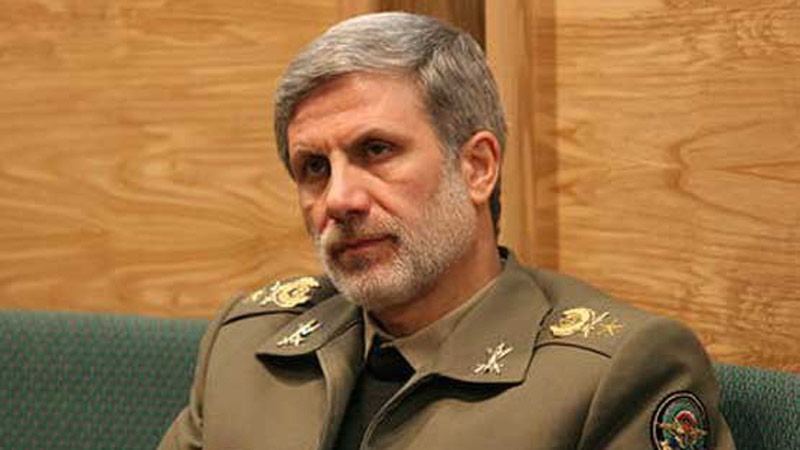
Iran’s army commander-in-chief, Major General Amir Hatami, has ordered the navy to keep the Strait of Hormuz closed and to tighten the closure “day by day” until the United States meets Tehran’s seven conditions for ending the war, Iranian media reported, as carried by Euronews, TASS and Roya News.
Hatami spoke at a meeting with senior military commanders in Tehran. TASS and Xinhua said the order was given on Tuesday 24 November; Euronews dated it to Monday. TASS said the order was addressed to the navy commander, Shahram Irani.
What Hatami said
Euronews said Hatami cited orders from Supreme Leader Ayatollah Mojtaba Khamenei. He said that until the conditions are fulfilled, the strait would not only stay shut but must be closed further each day, according to Euronews and Roya News.

Roya News, citing the Tasnim news agency, said he described the strait as a source of geopolitical leverage and a key part of Iran’s national power. He warned that anyone who helped Iran’s enemies would also bear the consequences.
Euronews reported him as saying that if the US started another war, Iran’s response would be more severe and without geographical limit. Xinhua quoted him as saying stronger management would be exercised over the strait.
Iran’s conditions
None of the reports TIMILEGIT read listed all seven conditions. TASS, citing parliament speaker and chief negotiator Mohammad Bagher Ghalibaf, listed lifting sanctions, unfreezing Iranian assets, ending the US naval blockade of Iranian ports, compensation for war damage and an end to hostilities in the region, including Lebanon.
Ghalibaf has said Iran will hold no negotiations with Washington until the conditions are met. TASS reported him as saying Tehran had sent its demands to Washington and was waiting for a reply.
Mines and shipping
Iran’s navy said on Tuesday that two oil tankers caught fire after hitting naval mines east of the strait, Xinhua reported. It said the vessels had switched off their identification systems and entered a forbidden area. No names or flags were given, and the claim has not been independently confirmed.
The commander of the Revolutionary Guards navy, Ali Ozmaei, warned ships against using unauthorised routes, Gulf News reported, citing ISNA. Earlier the Guards had said three tankers were hit, a claim the Joint Maritime Information Centre called unconfirmed, according to Euronews.
Brent crude fell to about $88 a barrel earlier on Tuesday, a three-month low, as more Middle East oil moved and a Libyan pipeline restarted, Gulf News reported.
Diplomacy
Qatar’s Prime Minister, Sheikh Mohammed bin Abdulrahman Al Thani, met US Secretary of State Marco Rubio and Vice President JD Vance in Washington on Monday and said the region could not bear another escalation, Euronews reported.
Qatar’s foreign ministry spokesman, Majed Al Ansari, said on Tuesday that diplomatic contacts were continuing and that Doha, as mediator, was keeping the details confidential, according to Gulf News.
No US response to Hatami’s order was reported in the outlets TIMILEGIT read.
Background
Iran tightened its grip on the strait on 28 February, after joint US and Israeli strikes on its territory, Xinhua noted. The US has since escorted tankers through the waterway and blockaded Iranian ports, and this week sanctioned an Iranian shadow banking network.
President Donald Trump said on Sunday that strikes on Iran could resume after the New Year, Euronews reported.
What happens next
Qatar is trying to bring both sides back to talks. TIMILEGIT will report any response from Washington and any new incidents in the strait.
Comments
No comments yet. Be the first to share your thoughts.

Related

Spain election 2026: voters choose on Sunday 29 November as polls put Feijoo’s PP ahead of Sánchez, with Vox as possible kingmaker
Iran calls the drone deaths of two Italian technicians in Kuwait a “false flag”, as Italy says the drone was Iranian-made